Gender Pay Gap Reporting Service
Client / Sector: Public sector digital service (Gender Pay Gap reporting)
My role: UX Research (with service improvement / prototype direction)
Team / context: Joined during Beta with existing prior research

Problem
Compiling Gender Pay Gap data is both time-consuming and a legal requirement. The service needed to better support employers to (1) submit accurate reports efficiently and (2) encourage actions to address their Gender Pay Gap.
What I did
- Reviewed and synthesised existing Beta research to establish what was already known and where gaps remained.
- Analysed service data to identify patterns: where users made errors, where drop-offs occurred, and where the process broke down.
- Conducted cross-channel feedback analysis to surface recurring pain points and issues.
- Ran internal stakeholder sessions, including sessions with behavioural psychology teams, to understand different hypotheses and constraints.
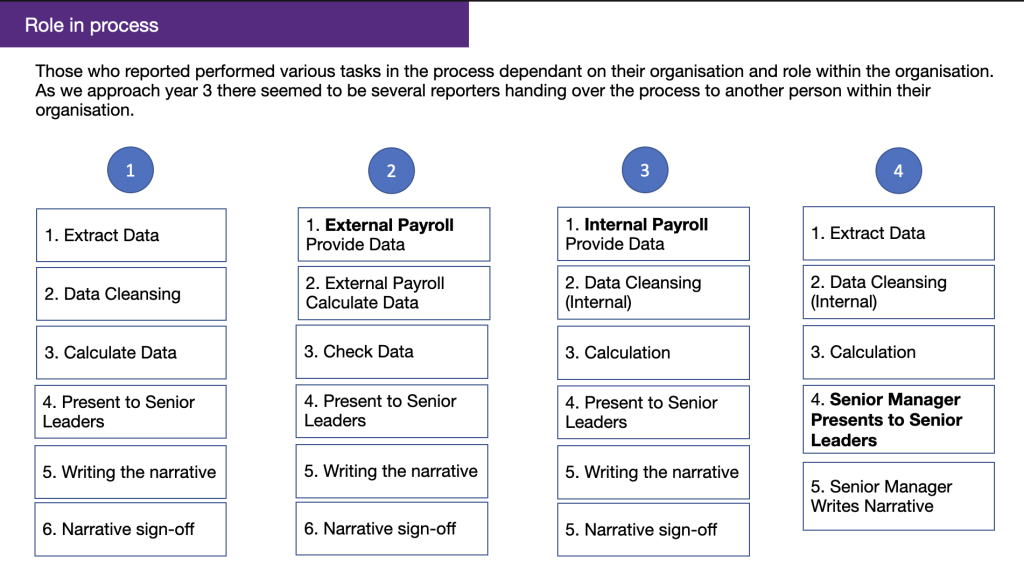
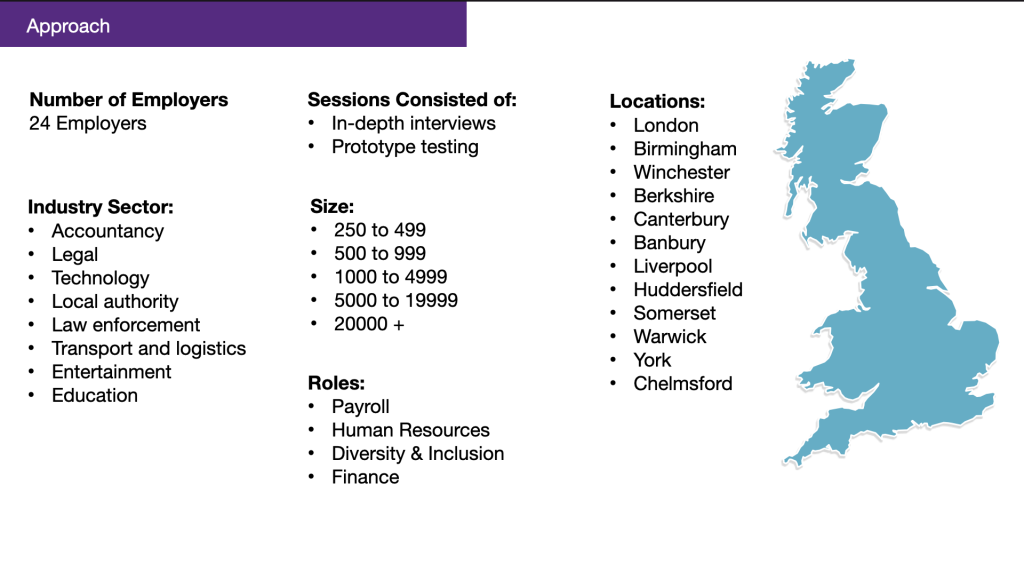
- Identified and recruited employers using the service, then conducted multiple rounds of research (remote and in-person) to understand needs and context of use.
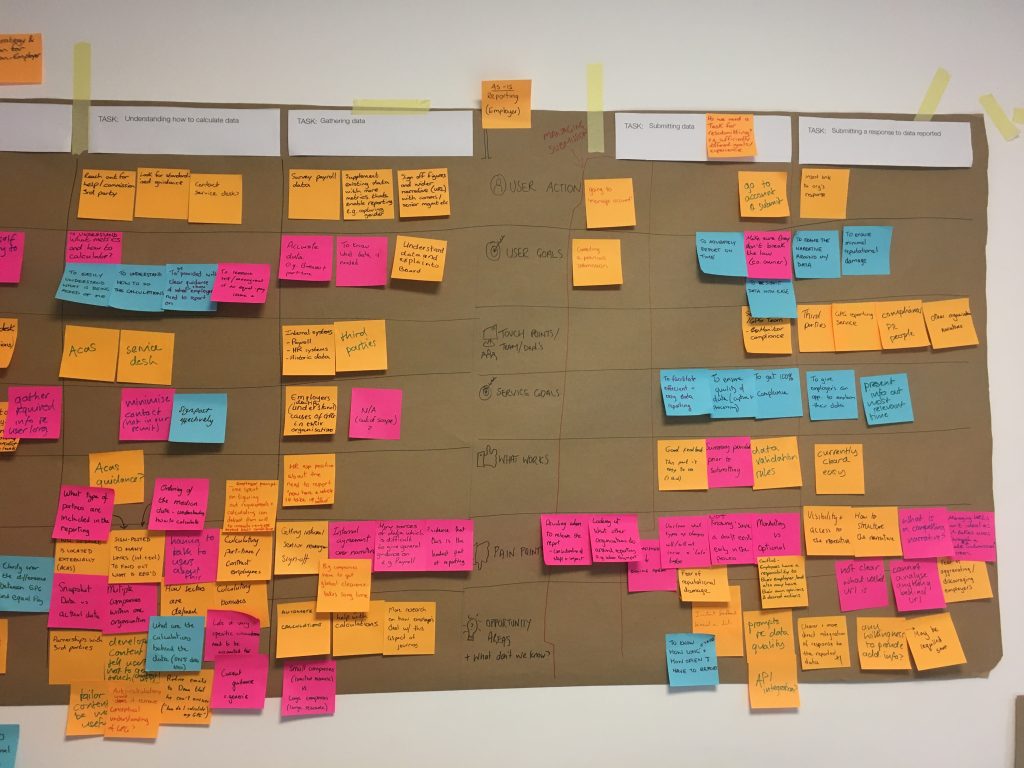
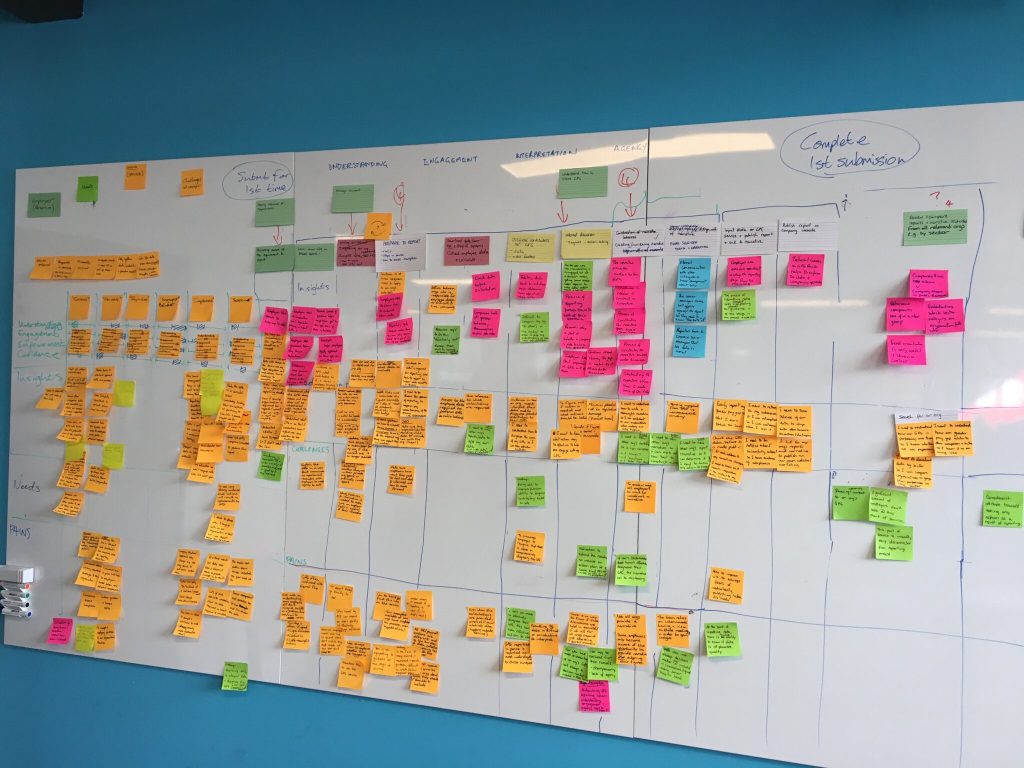
- Led / contributed to synthesis sessions to turn findings into actionable artefacts and design direction.
Key findings / decisions
- Reporting was perceived as burdensome; users needed clearer guidance and error prevention at key steps.
- Behavioural and informational cues were a lever to move the service beyond “submission” toward “addressing the gap”.
- The service needed an updated journey and clearer segmentation of employer needs.
Outputs
- Consolidated insight from prior research + new research
- Updated personas
- Updated end-to-end user journey
- Prototype of an improved reporting portal
- Usability testing feedback on the prototype to validate improvements and refine direction
Outcome
Created an evidence-based foundation for a future iteration of the service by combining analytics + feedback + employer research into a validated prototype direction, aimed at improving completion, reducing errors, and better supporting employers beyond compliance.
Methods / Tools
Service data analysis; feedback analysis; stakeholder workshops; employer interviews/research (remote + in person); synthesis; personas/journeys; prototype testing with Gov.uk prototype.