Rushmoor Borough Council
Rushmoor Borough Council: Website Redesign (Discovery to Build)
Client / Sector: Rushmoor Borough Council — Local government
My role: UX Research + IA and Prototyping (Axure)
Phase: End-to-end (Discovery through to build)

Problem
Rushmoor Borough Council wanted to redesign their website to better engage residents and ensure people could quickly find the information they most needed.
What I did
- Analysed existing audience and usage using demographic insight (Mosaic) alongside current site activity to understand who used the site and what they were doing.
- Facilitated stakeholder workshops to capture requirements from council staff and local councillors.
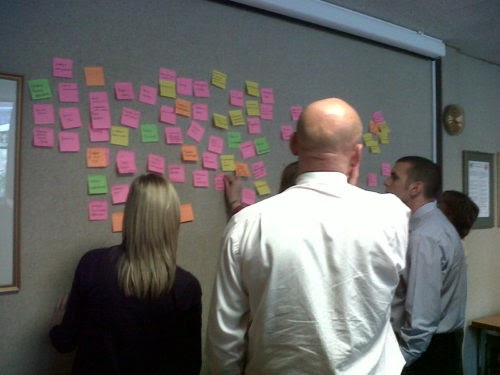
- Planned and ran four user workshops (council-supported recruitment to specified user groups) to gather needs and priorities.
- Used structured workshop methods (brainstorming activities and affinity sorts) to translate real-world problems into website requirements.
- Ran open card sort followed by closed card sort to validate navigation and labels.
- Designed a new information architecture based on card sort results and business requirements.
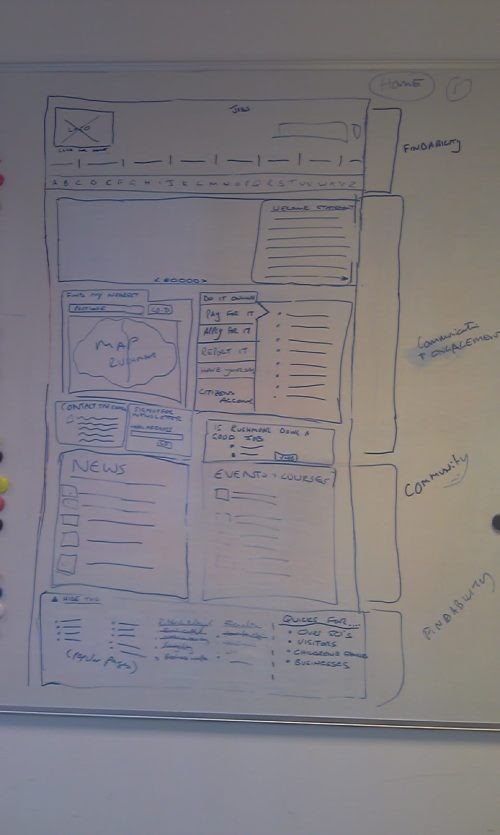
- Facilitated sketching workshops with the project team to explore solutions.
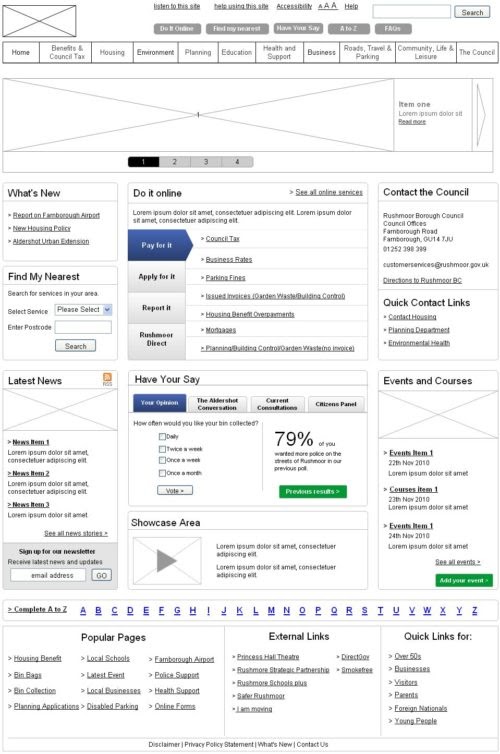
- Built a clickable Axure prototype from wireframes.
- Conducted usability testing of the prototype with staff and members of the public.
- Presented findings and rationale to senior decision-makers (governors of the council).
Key findings / decisions
- A major public need centred on rubbish and collection times.
- There was stakeholder pressure to place this in the main navigation.
- Research (card sort + usability testing) demonstrated users could reliably find this content under Environment and related areas without distorting the overall navigation model.
Outputs
- Workshop outputs and affinity themes
- Open + closed card sort findings
- New information architecture
- Wireframes + Axure prototype
- Usability test findings + recommendations
- Senior stakeholder presentation with evidence-based rationale
Outcome
The redesign direction was validated through research: despite stakeholder pushback, testing showed the proposed navigation structure worked for residents, and the IA supported finding high-priority tasks (including rubbish collection information) without compromising the overall structure.
Methods / Tools
Workshops; affinity sorting; open/closed card sorting; IA design; sketching; Axure prototyping; usability testing; stakeholder readouts. (Mosaic used for demographic insight.)