Tate Gallery
Schools & Teachers Digital Discovery Research
Delivered evidence-led recommendations for Tate Gallery, to improve resource findability, strengthen cross-curricular clarity, support inclusive classroom use, and streamline the visit booking experience.
Client / Sector: Tate (arts / education)
My role: UX Research (Discovery)

Problem
Tate wanted to understand how teachers plan lessons and organise cultural visits, and how Tate’s digital offering could better support resource discovery, classroom use, inclusivity, and visit booking.
What I did
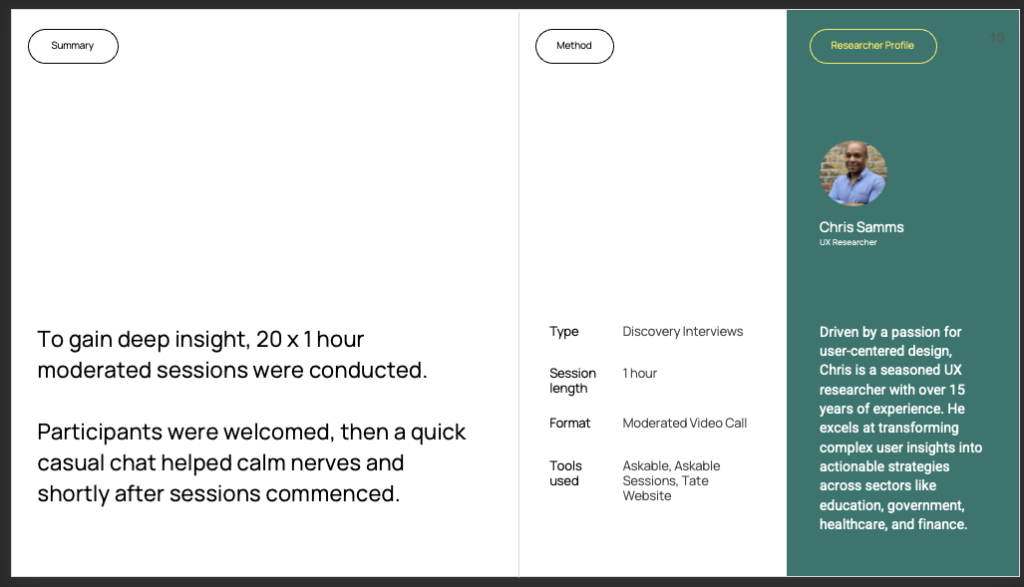
- Planned and ran 20 x 1-hour moderated interviews with teachers from varied backgrounds and subjects, including representation across ethnicities/genders, with emphasis on schools outside London and inclusion of special needs education. Schools and Teachers Project Di…
- Explored teacher behaviours and constraints around:
- lesson planning and where they source resources
- planning museum/gallery visits
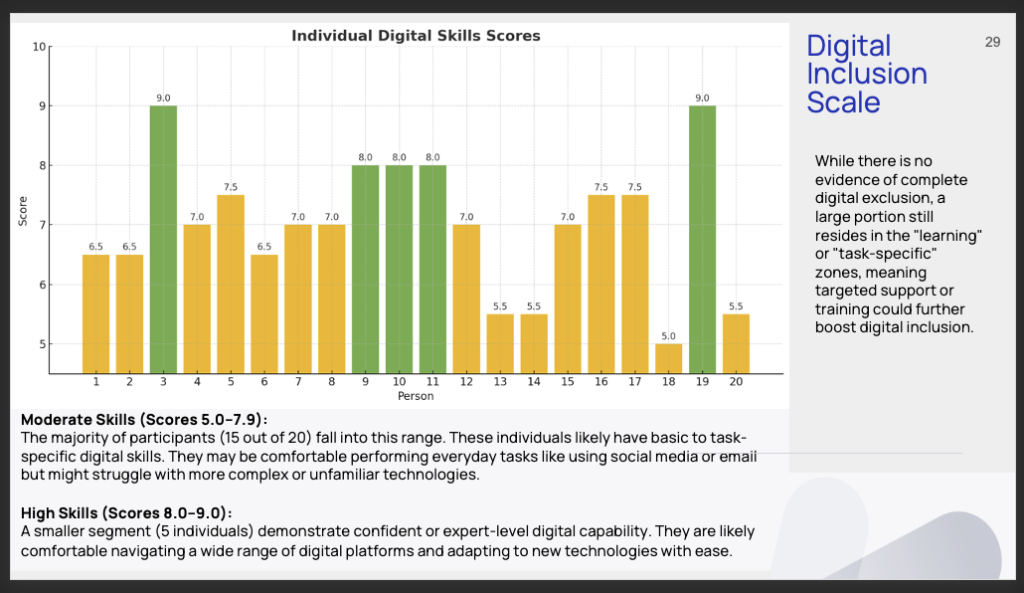
- barriers to accessing and adapting digital content
- inclusivity needs (SEND/EAL/mixed ability) Schools and Teachers Project Di…
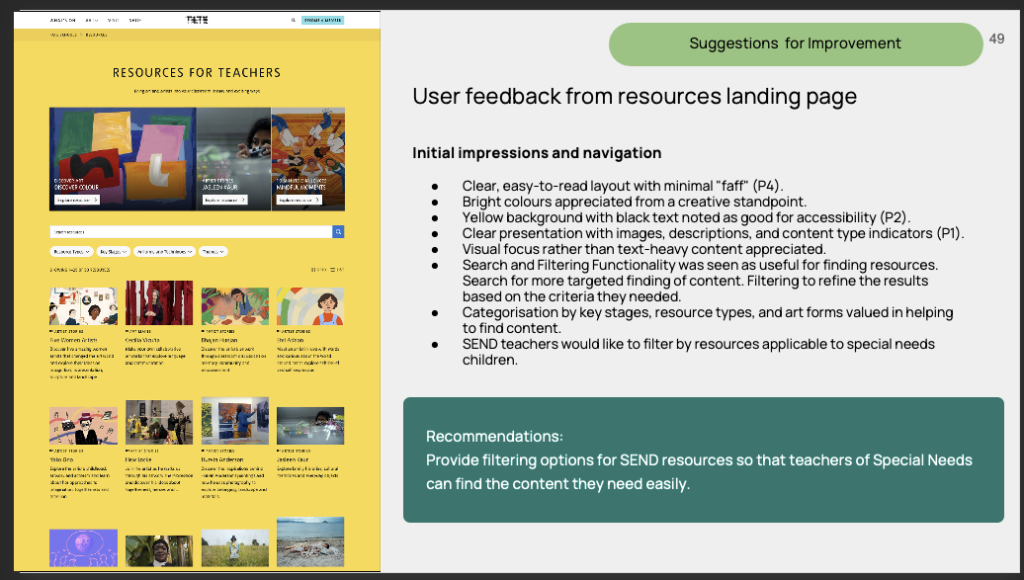
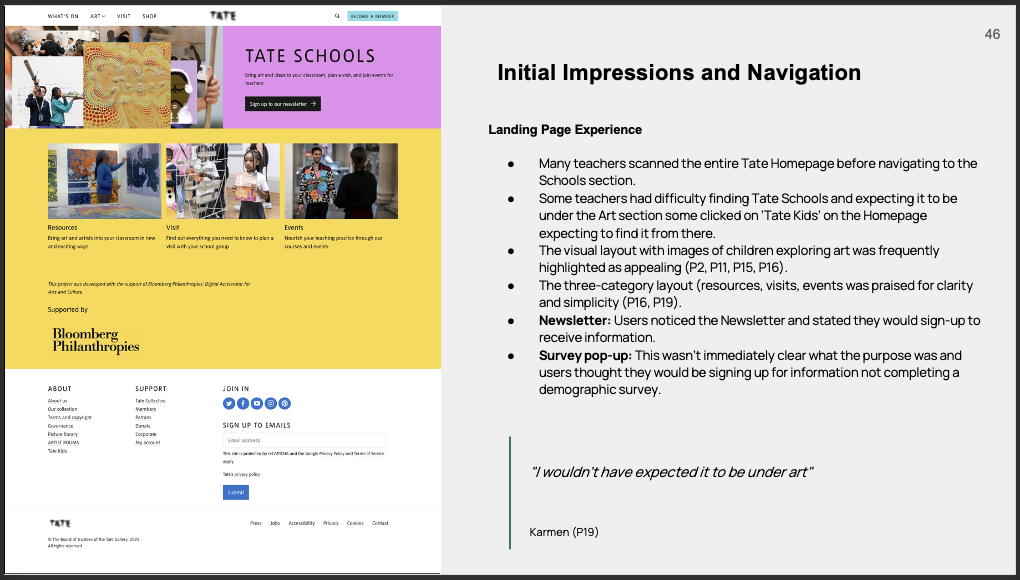
- Evaluated key parts of the Tate Schools digital journey (e.g., Schools landing, Resources section, exemplar resources, and “Visiting Tate” info) to identify friction and opportunities.
Key decisions / considerations
- Resource discovery is inefficient: navigation and filtering made it hard to locate relevant materials quickly. Schools and Teachers Project Di…
- Content often needs heavy adaptation for classroom realities (time, tech constraints, differing abilities). Schools and Teachers Project Di…
- Cross-curricular value isn’t obvious, limiting uptake by non-art specialists. Schools and Teachers Project Di…
- Inclusive design gaps: teachers often need to create multiple versions for SEND/EAL/mixed ability. Schools and Teachers Project Di…
- Visit planning/booking felt cumbersome, with friction for time-pressed educators (e.g., reliance on email requests rather than streamlined self-service).
Outputs
- Discovery insight set (teacher behaviours, needs, constraints)
- Clear evidence-backed recommendations across:
- improving findability (navigation, filtering, previews)
- making resources more “classroom-ready” (modular + editable formats)
- clearer curriculum mapping for cross-curricular use
- stronger inclusive design approach (UDL + SEND adaptations)
- simplifying visit planning/booking (self-service, standardised downloadable packs)
Outcome
Provided a practical research foundation to guide improvements to Tate’s schools offering—helping reduce teacher time cost, improve adoption, and make visit planning and resource use more accessible and scalable.
Methods / Tools
- Recommendations and stakeholder playback/readout
- Research planning and discussion guide creation
- Moderated interviews with teachers
- Evaluation of key journeys (Schools landing, resources discovery, visit planning)
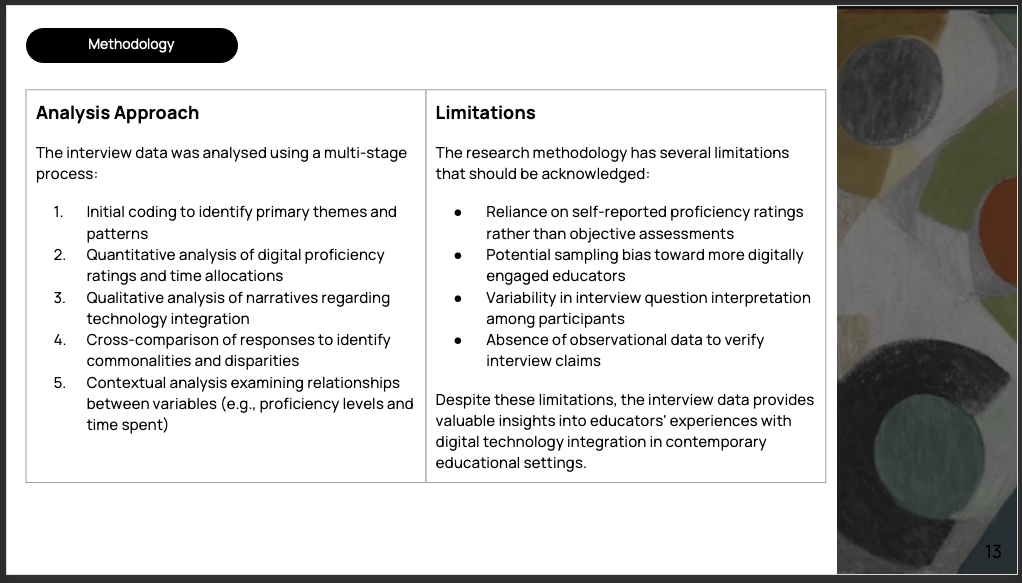
- Thematic analysis and synthesis workshops